
Behavioral Receptors: Receptor #1 - Will
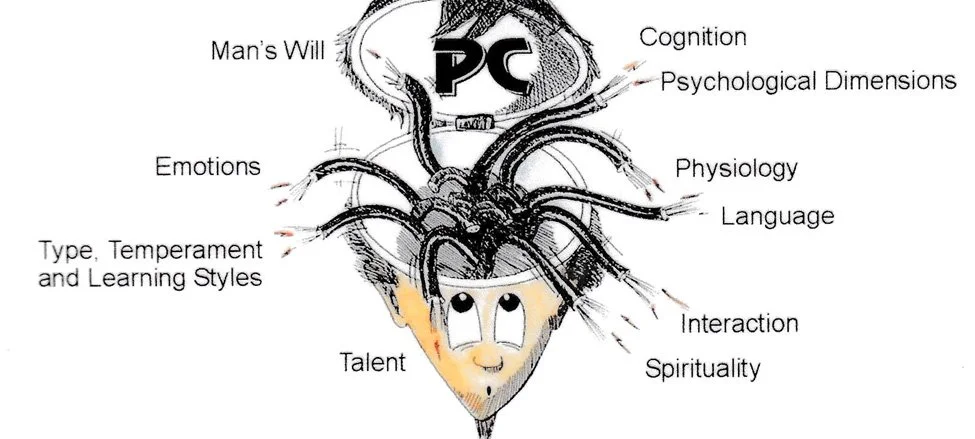
As you all might be aware, the Los Angeles Dodgers won the Baseball World Series for the second year in a row. Congratulations! Not an easy feat!
In the commentary after the 7th game win, their manager Dave Roberts spoke about three key players who helped make it happen. Rojas hit the tying home run in the 9th inning. Will Smith hit the game-winning home run in the 11th inning. And their star pitcher, Yoshinobu Yamamoto, pitched two days in a row and won the game.
Dave Roberts commented on their grit but placed even more emphasis on something deeper, the concept of Will. He said these players “willed their way to victory”, something he said he had never experienced before.
You do not hear the term Will that much anymore. The concept of Will has been replaced in our current language with words like grit or resilience. But what he was describing, that inner energy that determines outcome, is exactly what I have spent years studying.
When I studied medicine to understand how it became a model for replication, I found myself fascinated by how the body stays connected. It is through receptors, chemical connecting points that communicate through the fluidity of peptides. Peptides carry information and energy from one part of the body to another so that everything stays aligned and functioning.
To become a doctor, you have to study and master those internal connections. Medicines do not create energy; they connect and activate what is already inside us.
So my thought was, if there are internal physiological receptors, then there must also be behavioral receptors that connect and activate our human psychology. And if that was true, they could be mastered too, and maybe even modeled.
That thought became the foundation for what I now call Interactive Perceptual Psychology (IPP), a way to understand and activate the internal system that drives all behavior.
Receptor #1: Will. The Power of Choice and Determination
The first behavioral receptor I studied was the concept of Will, the power of choice and determination. It is the Will to Win. It is a deliberate decision.
After my studies in the 1990s confirmed that motivation, that external energy, was not the true source of behavioral change, I asked myself: If the energy for change is internal, then where is it located?
That question became the starting point of my work on behavioral receptors.
Just like the body’s receptors, these internal systems are pre-wired from birth. They are part of our human condition. When they are aligned and connected, they release enormous energy, not from the outside, but from within.
And that is what Dave Roberts saw. He saw three players whose internal Will determined the outcome of Game 7. He felt it. He described it.
Do you think it is ironic that the Smith’s first name was Will?
Behavior Is the Control of Our Perceptions
You have heard me say this before: behavior is the control of our perceptions.
For too long, we have tried to change behavior by attacking behavior. We have used punishment, reward, fear, and pressure, from military conditioning to the “Scared Straight” programs, all based on the old stimulus-response idea that the energy for change is external.
It does not work. It never has.
The real power comes from within, from activating those internal receptors that regulate how we perceive, not just how we act. When we align thought, feeling, and action internally, the energy for change flows naturally outward.
That is the essence of Interactive Perceptual Psychology. It reverses the old behavioral paradigm. Instead of trying to manage or motivate from the outside, we activate and align the inside.
Operationalizing Will: The FOCUS® Model
The FOCUS® Model became the way to operationalize this internal process and bring Interactive Perceptual Psychology to life.
It is a visual and methodological model that functions within a helping relationship. It starts with a client-centered philosophy. We begin with the Receiver (R), not the instructor, because that is where the energy is.
From there, the process moves through four steps:
Formation of Concept – Developing one’s own picture and perception of reality.
Integration of Concept – Sharing that perception with others.
Synergration of Concept – Activating the behavioral receptors to plan, align, and build trust.
Reformation of Concept – Reviewing and reforming for continued growth and balance.
This process ensures that the person’s Will is engaged and aligned with action, the beginning of transformation.
When we applied this model, particularly in the Winning Profile™ studies, we found that individuals with low self-efficacy but high expectations showed remarkable improvement after exposure to the system. Their internal energy, their Will, had been activated.
The Takeaway: The Power Is Already Inside You
If you are waiting for motivation, for management, or for someone else to create change, stop.
The power of change is already inside you. It is in your Will, your first behavioral receptor.
The first step is to deliberately form your own concept, your own clear and accurate picture of yourself, your potential, and your purpose. That act alone begins the activation process.
Once the inside starts to align, everything on the outside follows.
“Behavior is the control of our perceptions. When we change what we perceive, we change everything we do.”
Stay tuned for Receptor #2 as we continue exploring the internal system that drives all human growth and development.